
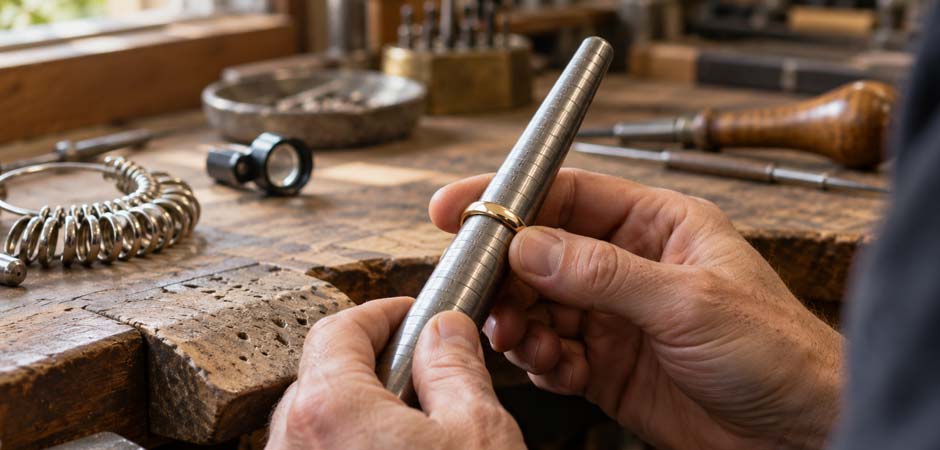
A ring that once fit perfectly can become uncomfortable years later. An inherited ring might never have fit at all. Sometimes the problem is simpler: you love the ring, but it keeps turning sideways or feels difficult to remove.
Many rings can be resized, but the answer depends on more than the number stamped on a sizing tool. Metal, construction, stone placement, and the amount of adjustment all matter. If you’re considering ring resizing in Wheaton, an inspection is the best starting point for understanding your options, the cost, and the likely turnaround.
Which Rings Can Usually Be Resized?
Many gold, platinum, and sterling silver rings can be adjusted by a jeweler. A plain band with an undecorated section at the bottom often offers more flexibility than a ring covered with stones or intricate details.
For many designs, making a ring smaller involves removing a section of metal and joining the band again. Making it larger may involve adding matching metal. The jeweler then restores the shape and finish and checks any settings affected by the work.
That doesn’t mean every gold ring can safely move several sizes. A small adjustment to a sturdy band is different from a large change to a delicate antique. The ring’s individual construction determines what’s reasonable.
What Makes Resizing More Complicated?
Stones set around the entire band leave little room for a straightforward adjustment. Full eternity rings may require specialized work, a redesign, or an alternative to resizing. Even a band with stones only along the shoulders needs careful evaluation because changing its shape can affect the settings.
Tungsten carbide and ceramic rings generally cannot be resized using traditional methods. Some titanium, stainless steel, and mixed-material designs also have significant limitations. A manufacturer’s size-exchange option may be worth investigating.
Engraving, decorative patterns, enamel, and unusual profiles can introduce additional challenges. Ask whether the adjustment would interrupt a design or affect an inscription. GIA’s ring size guide explains why certain styles are harder to resize.
What Affects Ring Resizing Cost?
There isn’t one reliable price for every ring. A useful estimate accounts for the work your specific piece needs.
The metal matters, especially when material must be added. A wider or thicker band requires more metal than a narrow one. The amount of adjustment also influences the labor involved.
Stone placement can add work if settings need attention during or after resizing. A worn band, old repair joint, or thin section may need reinforcement before an adjustment makes sense.
Finishing matters, too. Matching a brushed texture, restoring a detailed pattern, or applying rhodium to white gold may affect the estimate. These steps should be discussed rather than assumed.
When comparing quotes, ask what is included. Does the estimate cover stone checks, finishing, and any recommended repairs? A clear explanation is more useful than comparing two numbers without knowing the scope of work.
How Long Does Ring Resizing Take?
The time spent at the workbench and the time before your ring is ready are different things.
A straightforward adjustment may require less work than a ring with elaborate settings, but the shop’s schedule still affects pickup. Ordering matching materials, arranging specialized work, or addressing existing damage can extend the timeline.
If you need the ring for an anniversary, holiday gathering, or proposal, mention that date when you bring it in. October is a practical time to ask about adjustments ahead of the holiday season.
Request an estimated completion date after the inspection. Avoid assuming that a simple-looking ring qualifies for same-day service or that another customer’s turnaround applies to yours.
Make Sure Resizing Is the Right Solution
A ring that spins doesn’t always need to be made smaller. A prominent center setting, a larger knuckle, or differences between knuckle size and finger size can affect how it sits.
In some cases, a jeweler may suggest sizing beads or another fit adjustment. These options depend on the ring and the wearer’s comfort; they aren’t universal fixes.
Finger size can also vary with temperature and time of day. Before changing a ring permanently, explain whether the fit problem is constant or comes and goes. Bring any companion band you normally wear with it so the jeweler can assess the combination.
What to Bring and Ask
Bring the ring, any available information about its metal, and details of previous resizing or repairs. Mention an inscription you want preserved and any concerns about loose stones or worn areas.
Ask three questions: Can this ring be adjusted safely? What work does the estimate include? When should it be ready?
Those answers help you decide whether resizing, another fit solution, or a more involved restoration is appropriate.
Ring Resizing at Stones Jewelry in Wheaton
You don’t need to diagnose the problem before visiting. Bring the ring and explain what feels wrong.
Stones Jewelry offers ring sizing and jewelry repair in downtown Wheaton. Contact our team to discuss an evaluation, available options, and an estimate for your piece. The goal is a comfortable fit that respects the ring’s construction and the memories attached to it.